
Downsized fifth-generation Grand Prix debuts with Base, LJ and SJ personalities. V6 and multiple V8 configurations reflect GM’s transition toward lighter, more efficient intermediates.
G-Body / Pontiac / Grand Prix
1978–1987 MODEL GUIDE
Pontiac Grand Prix
Pontiac’s downsized personal-luxury coupe: formal, rear-wheel-drive, mechanically flexible and—despite modest factory output in much of the era—one of the most distinctive foundations for a G-body build.
YEARS1978–1987
BODY2-door coupe
DRIVERear-wheel drive
WHEELBASE~108 in.
HALO MODEL1986 2+2
MODEL IDENTITY
Personal luxury on the downsized GM intermediate.
The 1978 redesign dramatically reduced the Grand Prix’s size and mass compared with its 1973–1977 predecessor. The car retained long-hood/short-deck personal-luxury cues while moving onto the compact rear-drive intermediate architecture that enthusiasts now group into the G-body family.
TRIM STORY
Base · LJ · SJ · LE · Brougham
Early cars used familiar Grand Prix identities such as LJ and SJ, while later years shifted toward LE and Brougham naming. The exact engine, axle, wheel, suspension and appearance package can vary significantly by model year and market, so trim badges alone should never be treated as a complete mechanical specification.
PROJECT-CAR APPEAL
Shared architecture, Pontiac sheetmetal
The chassis shares broad geometry with other GM intermediates, creating strong brake, suspension, axle and powertrain-swap possibilities. That interchange is one reason the Grand Prix remains compelling even when original factory performance was modest.
YEAR CHRONOLOGY
The G-body-era Grand Prix
Personal-luxury themes continue while powertrain offerings vary by emissions requirements and market. Period four-speed-manual examples are unusual and enthusiast-notable.
The year of the Master Customs LJ build. Pontiac’s 4.3L/265 V8 was one available Grand Prix LJ engine during the model year; specific cars require VIN/RPO verification.
The rear-drive intermediate family transitions to GM’s G-body designation. LJ remains part of the Grand Prix lineup through the early 1980s while Pontiac’s broader midsize strategy evolves.
Later LE/Brougham-oriented positioning emphasizes comfort and appearance, while shared GM engine/transmission hardware makes the cars increasingly attractive as swap foundations today.
The Grand Prix 2+2 radically changes the silhouette for NASCAR homologation, adding a smooth nose and long fastback-style rear glass to the traditional coupe.
Final model year for this rear-drive Grand Prix generation before Pontiac moves the nameplate to a front-drive W-body architecture for 1988.
1981 LJ SPOTLIGHT
The factory reference behind the Master Customs car
Published specification references list a 4.3L/265-cubic-inch Pontiac V8 at 120 hp in an automatic-equipped 1981 Grand Prix LJ configuration. That does not mean every LJ used that engine; verify the actual car by VIN, engine code and build documentation.
MY BUILDS
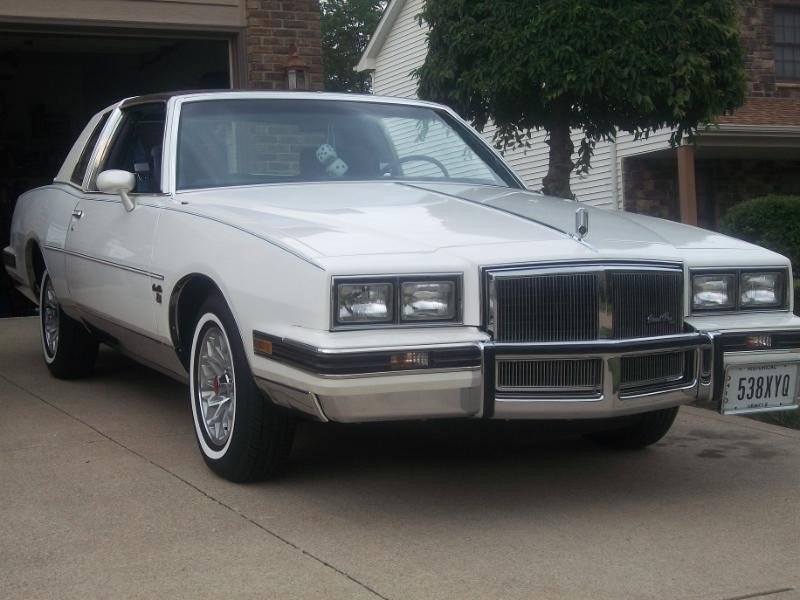
1981 Pontiac Grand Prix LJ
Your build takes the factory G-body foundation in a very different direction with a 1987 Buick Grand National drivetrain. Keeping these two pages separate makes both more useful: one preserves historical reference; the other tells the modified-car story.
Open My Build →OWNERSHIP & RESTOMOD CHECKS
What matters before modifying one
Frame & body
- Rear frame rails and body mounts
- Floor and trunk corrosion
- Door hinge sag and weather sealing
- Header panel and model-specific exterior trim
Mechanical baseline
- Steering box/idler/pitman wear
- Front control-arm bushings and ball joints
- Rear control-arm bushings
- Cooling, vacuum and carburetor controls on original cars
Swap planning
- Crossmember and accessory clearance
- Transmission length/mount position
- Driveshaft and rear-axle strength
- Fuel-system and electrical modernization
RESEARCH STANDARD
Master Customs treats period factory literature as the baseline and separates factory configuration from enthusiast modification. Model-year equipment can vary by engine, trim, emissions calibration, assembly plant and RPO. The 1986 Grand Prix 2+2 is a useful reminder that reputable secondary sources sometimes disagree on production totals and even advertised output; where that happens, Master Customs flags the discrepancy instead of presenting one uncertain number as settled fact.